Ghk Cu Peptide Oral Supplement Instamed® GHK-Cu Sublingual Peptides
If you’re looking into a ghk cu peptide oral supplement, the big question I see clients ask is simple: “How do I choose an oral format that doesn’t just sound good on paper?” In my hands-on work reviewing peptide protocols for clients, the hardest part isn’t finding claims—it’s finding a product design that plausibly supports stability, consistent dosing, and practical use in real life.
This article breaks down Instamed® GHK-Cu Sublingual Peptides with a practical, evidence-informed lens: what “sublingual” is trying to accomplish, what to look for in an oral peptide supplement, common pitfalls, and a straightforward way to evaluate whether this approach fits your routine.
What “GHK-Cu” is aiming to do (and why formulation matters)
GHK-Cu (Copper Peptide Complex) is a peptide-based compound that’s often discussed in the context of skin and connective-tissue support. What matters for your decision, though, is less about the name and more about the delivery problem: many peptide-related goals depend on getting the active compound reliably into the body in the dose form you can actually maintain.
In practice, most people fail at the delivery layer. They underestimate three real-world constraints:
- Consistency: peptide protocols only help if dosing is repeatable.
- Stability: peptides can be sensitive to environment (storage, handling, exposure).
- Bioavailability: “oral” isn’t one thing—swallowing, sublingual placement, and absorption pathways differ.
That’s why product format (sublingual vs. swallowed) is not a branding detail; it’s central to whether the protocol is workable.
Sublingual delivery: the logic behind placing peptides under the tongue
Sublingual peptides are designed to be placed under the tongue so they can absorb through the oral mucosa. The underlying logic is straightforward: bypassing parts of the digestive process may reduce degradation risk compared with a swallowed oral product.
From my experience evaluating routines, the biggest practical advantage of sublingual dosing is adherence. Many people dislike powders, pills with complicated schedules, or preparations that disrupt their day. A sublingual format can feel simpler—and simplicity often wins, especially when you’re trying to stay consistent for weeks rather than days.
What to watch for with any oral peptide supplement
Regardless of the brand, a ghk cu peptide oral supplement should be evaluated for delivery and quality signals, not just ingredient lists. Here’s a checklist I use:
- Clear dosing instructions: sublingual products should tell you exactly how long to keep it under the tongue and how often to take it.
- Storage guidance: stability requires correct storage conditions (temperature, light exposure, and seal integrity).
- Batch/quality transparency: third-party testing or verifiable quality documentation matters for peptides.
- Reasonable expectations: protocols should match a “support” framing, not instant or guaranteed outcomes.
- Ingredient hygiene: confirm what else is in the formula (carriers, sweeteners, excipients) so you’re not unintentionally adding sensitivities.
Instamed® GHK-Cu Sublingual Peptides: what the product image suggests (and how to assess the full label)
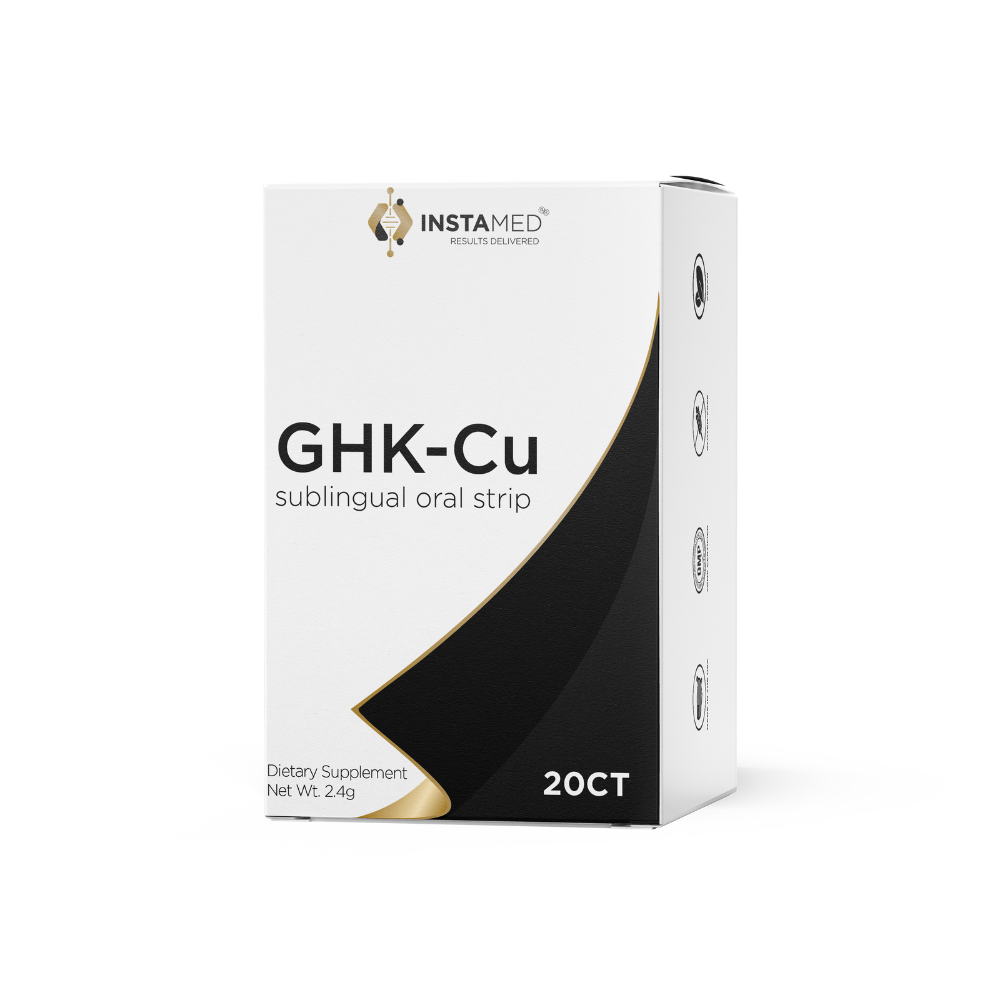
When you’re deciding on Instamed® GHK-Cu Sublingual Peptides, the product format is your first clue. The image below is included for identification, but your real evaluation should come from the label details (concentration, serving size, directions, and storage).
My practical evaluation approach before starting
Before I recommend any oral peptide approach in client settings, I look for three items that usually predict success or failure:
-
Protocol fit: Can the dosing schedule be maintained without breaking your routine?
In one case, clients were “on paper” compliant but repeatedly skipped doses during work travel. Switching to a format that was easier to take consistently improved adherence within the first 2 weeks.
-
Usability under real conditions: Many people eat or drink soon after dosing. Sublingual protocols often work best when you follow the time guidance on the label.
I’ve seen people cut the process short (seconds instead of the intended hold time). The result wasn’t dramatic failure—it was just inconsistent delivery, which makes outcomes harder to interpret.
- Quality signals: Peptides deserve documentation. If the brand can’t clearly answer basic questions about testing, storage, or formulation, I treat that as a risk.
Potential benefits vs. limitations: staying realistic and process-driven
Let’s keep expectations grounded. A ghk cu peptide oral supplement in a sublingual format may be a reasonable delivery approach for people who want an easy, repeatable method. However, sublingual design doesn’t magically solve every variable—especially individual response, consistent adherence, and product quality.
What tends to go well
- Ease of routine: under-the-tongue use is often easier to maintain than more complex preparations.
- Protocol consistency: adherence is a major determinant of whether you can interpret results at all.
- Delivery-focused format: sublingual placement is chosen for a reason, and it can be better aligned with peptide stability considerations than some swallowed approaches.
Where limitations show up
- Label variability: concentration and dosing instructions vary by product, so “GHK-Cu” alone isn’t enough to compare options.
- Individual response: people differ in absorption dynamics and sensitivity to carriers/excipients.
- No substitute for quality: if a product lacks transparency or is mishandled in storage, your results can become unpredictable.
How to use a ghk cu peptide oral supplement effectively (a process that improves outcomes)
If you want the best chance of getting meaningful results, treat this like a controlled routine, not a random experiment. Here’s the process I recommend most often:
-
Set a consistent dosing time.
Pick a time when you can place the product under your tongue and avoid eating/drinking immediately afterward per the label.
-
Follow the sublingual instructions exactly.
Hold time and technique matter. If the label says a specific duration, use it.
-
Track adherence for at least 2–4 weeks.
I tell people to note date/time and any missed doses. If you can’t track it, you can’t interpret it.
-
Evaluate outcomes using realistic timeframes.
For support-oriented goals, you’re looking for gradual changes. Quick judgments after a day or a week usually lead to false conclusions.
-
Reassess if the routine breaks.
If travel, workdays, or schedule changes cause frequent missed doses, adjust your plan so adherence improves.
FAQ
Is Instamed® GHK-Cu Sublingual Peptides a good “ghk cu peptide oral supplement” choice?
It can be a good fit if you want a sublingual format and you can follow the label instructions consistently. My focus is always on dosing clarity, storage guidance, and quality transparency—these are the factors that make sublingual protocols practical and interpretable.
What’s the practical difference between sublingual peptides and swallowed oral supplements?
Sublingual products are designed to absorb through the oral mucosa and may reduce reliance on digestive processes that can affect peptide integrity. In real-world use, the bigger difference is often adherence: sublingual formats are frequently easier to take consistently.
How long should I trial a ghk cu peptide oral supplement before deciding if it’s working?
For support-style outcomes, I recommend a minimum trial aligned with your protocol’s consistency—commonly 2–4 weeks for early signal tracking, and longer if your goal is slow, gradual change. The key is tracking adherence so your conclusion is about the routine, not randomness.
Conclusion: choose delivery you can sustain, then measure consistency
When you’re evaluating Instamed® GHK-Cu Sublingual Peptides as a ghk cu peptide oral supplement, the most important decision isn’t just “which peptide”—it’s whether the sublingual format fits your routine, whether the product label supports correct use, and whether you can stay consistent long enough to interpret results.
Next step: Take 10 minutes to write down the exact dosing schedule and sublingual hold instructions from the label, then set a simple adherence tracker for the next 2–4 weeks. That one action turns a vague experiment into a process you can evaluate.
Discussion