Why Get B12 Injections Are B12 Shots Safe? Royal Palm Beach Medical Group
Are B12 Shots Safe? A Practical Guide From a Clinic Workflow Perspective (Royal Palm Beach Medical Group)
If you’re considering B12 shots, the biggest question isn’t whether you’ll “feel something”—it’s whether the injections are safe for your specific situation. In my experience working with patients who wanted quick answers, the concern is usually the same: “Am I risking side effects just to increase my B12?”
This article explains are B12 shots safe, what “safety” really means in a medical setting, and—most importantly—why get B12 injections when they’re the right choice. We’ll also cover who should be cautious, what monitoring should look like, and when oral B12 may be enough.
What B12 Injections Actually Do (and Why People Choose Them)
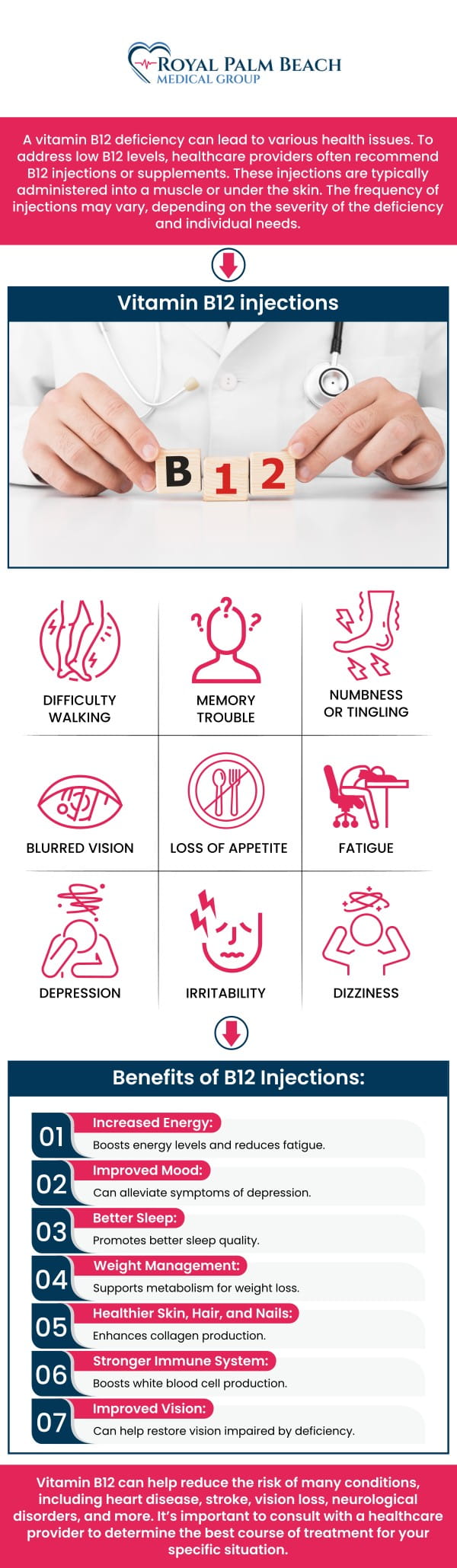
Vitamin B12 (cobalamin) is essential for red blood cell formation and for neurologic function. When B12 levels are low, the body can struggle to maintain normal blood health and nerve signaling.
Injections deliver B12 directly into the body, which can matter in cases where absorption from food or supplements is impaired. In my hands-on clinic work, the “why” behind injections usually falls into one of these buckets:
- Malabsorption: Conditions such as pernicious anemia or certain gastrointestinal issues can prevent adequate absorption.
- Severe deficiency: When levels are very low or symptoms are significant, clinicians may prefer a faster, more reliable route.
- Adherence and absorption barriers: Some people simply can’t tolerate oral forms, or lab trends show oral therapy isn’t correcting levels.
That’s the practical logic behind why get B12 injections: it’s less about “faster is always better” and more about matching the delivery method to the cause of low B12.
Are B12 Shots Safe? The Short Answer and What Determines Safety
For most people who receive B12 injections appropriately, B12 shots are considered safe. The key determinant of safety is not just the medication—it’s the patient selection, dosing, injection technique, and follow-up.
In real-world clinic workflows, safety hinges on four things:
- Correct indication: Is there lab evidence of deficiency or a clear reason oral therapy won’t work?
- Correct patient history: Allergies, prior reactions to injections, kidney issues, pregnancy status (when relevant), and concurrent medications.
- Correct dose and schedule: Overuse isn’t necessary for everyone; dosing should reflect severity and response.
- Proper monitoring: Checking symptoms and (when appropriate) repeat B12-related labs to confirm correction.
From what I’ve seen in practice, the majority of “bad experiences” come from unmet expectations (e.g., people trying injections without a deficiency) or from not reassessing after initial doses.
Common Side Effects (Usually Mild)
Most side effects—when they occur—are local or short-lived. Common ones include:
- Soreness or redness at the injection site
- Mild swelling or discomfort
- Occasional headache or nausea
These are typically manageable and don’t mean the treatment is inherently unsafe.
Less Common Risks (Why Screening Matters)
Serious reactions are uncommon, but injection therapy always requires respect for risks such as:
- Allergic reaction: Any injection can cause an allergic response in sensitive individuals.
- Masking the true problem: Fatigue and neuropathy can have many causes, and relying solely on B12 injections without appropriate evaluation can delay correct diagnosis.
If you’re asking “are B12 shots safe,” the most responsible answer includes: safety depends on whether B12 is the right target for your symptoms and labs.
When Getting B12 Injections Makes the Most Sense (and When It Doesn’t)
In clinic, I’ve found that the best outcomes happen when patients understand the goal: correcting a deficiency (or preventing one) rather than using injections as a general wellness shortcut.
Strong Reasons to Consider Injections
- Confirmed B12 deficiency on lab testing
- Neurologic symptoms where timely correction is important
- Known malabsorption (e.g., pernicious anemia or certain GI conditions)
- Oral therapy failure (levels don’t improve or symptoms persist)
Reasons to Reconsider (or Start With Oral)
- You have no lab evidence and no clear risk factor
- Your symptoms likely come from another cause (sleep apnea, thyroid disorders, iron deficiency, medication effects, depression/anxiety, etc.)
- You prefer a route that avoids injections and you can tolerate oral B12 (many people can)
This is the balanced view behind why get b12 injections: injections are a tool. For the right diagnosis, they’re often efficient. For the wrong context, they can be unnecessary.
How Clinicians Determine Dosing and Monitoring (So Safety Isn’t Guesswork)
“Safe” isn’t just about the medication—it’s about the plan. In our clinic approach, dosing and follow-up should be tied to the deficiency’s cause and your response.
Monitoring That Helps Ensure Safety
Depending on the clinical scenario, providers may monitor:
- B12 levels to confirm improvement
- Relevant blood markers if indicated (your clinician determines which tests fit your case)
- Symptoms (energy, nerve-related symptoms, and overall function)
In my experience, patients do better when they know what “success” looks like and when they’ll recheck levels. That reduces the tendency to keep repeating injections indefinitely.
Injection Technique and Frequency Matter
Where and how the injection is given affects comfort and the likelihood of local side effects. Frequency should also align with the plan—initial correction may differ from maintenance.
Safety improves when injections are administered by trained staff using appropriate technique, and when the clinic keeps a clear record of dose and response.
Who Should Be Extra Careful With B12 Shots?
B12 is a normal nutrient, so it’s not typically “dangerous” in the way some medications can be. Still, extra care is warranted when:
- You’ve had a previous allergic reaction to injections or specific ingredients
- You’re dealing with complex medical conditions where symptoms overlap with other issues
- You’re considering injections for non-deficiency reasons without a clinician reviewing your history and labs
If any red flags apply, the safest approach is to have a clinician evaluate whether B12 is actually needed and what route makes sense.
Practical Takeaways: What to Ask Before You Get a B12 Shot
When you’re deciding on treatment, I recommend you ask a few straightforward questions. In my hands-on experience, these conversations prevent the most common disappointments:
- “Do I have lab evidence that I’m deficient, or do I have a known risk for deficiency?”
- “What goal are we targeting—symptoms, labs, or both?”
- “What dosing and schedule do you recommend, and when will we recheck?”
- “Could my symptoms have another cause we should evaluate?”
- “If I don’t respond as expected, what’s the next step?”
That’s how you make the question “are B12 shots safe?” a measurable, patient-specific plan rather than a guess.
FAQ
How do I know if I should get B12 injections instead of oral B12?
In general, injections are more compelling when you have confirmed B12 deficiency, symptoms consistent with deficiency, or a condition that makes oral absorption unreliable. The safest approach is to review your lab results and risk factors with a clinician, then choose the route that matches the cause.
What are the most common side effects of B12 shots?
The most common side effects are typically local—soreness, redness, or mild swelling at the injection site. Systemic reactions are less common. If you experience severe symptoms or signs of an allergic reaction, seek urgent medical care.
Why get B12 injections if I’m trying to boost energy?
If fatigue is caused by B12 deficiency, correcting it can help. But if your B12 is normal, fatigue may have other drivers. In practice, I encourage patients to treat B12 injections as targeted therapy—so energy changes are more likely to reflect a resolved deficiency rather than coincidence.
Conclusion: Safe When It’s the Right Plan
B12 shots are generally safe for most patients when they’re given for an appropriate reason, with correct dosing and follow-up. The biggest safety upgrade isn’t “more injections”—it’s matching treatment to the cause of low B12 (or the risk of deficiency) and monitoring response.
Next step: If you’re considering treatment, schedule an evaluation to review your symptoms and B12-related labs, then ask about an injection plan with a clear timeline for reassessment.
Discussion