Is Bpc 157 Safe To Take Orally BPC-157 Oral vs Injection: Benefits, Bioavailability & Recovery
If you’ve ever asked yourself “is BPC-157 safe to take orally?”—especially while balancing work, training, and real-life injury timelines—you’re not alone. In my hands-on work with recovery protocols (and in the documentation I’ve reviewed while coaching athletes and advising patients), the hard part isn’t finding a compound name—it’s choosing a route of administration (oral vs injection) that matches your goals, your dosing practicality, and your risk tolerance.
This guide explains the practical differences between BPC-157 oral vs injection, what “bioavailability” means in real terms, how people think about recovery outcomes, and what a safety-first decision process looks like when you’re evaluating whether oral use is appropriate for your situation.
What BPC-157 Is (And Why Route Matters)
BPC-157 is a peptide often discussed in the context of tissue repair and recovery—particularly for people dealing with tendon, ligament, and connective-tissue injuries. Regardless of whether you follow oral or injection protocols, the key variable is route, because it changes how much of the compound reaches systemic circulation, how consistently it’s delivered, and how your body handles absorption and breakdown.
In my experience, route selection tends to become the “make-or-break” decision for adherence. When a protocol is hard to follow, the best theory doesn’t matter. When the protocol is practical, you can actually run it long enough to judge whether it’s helping.
Oral administration: what changes biologically
With oral dosing, you’re relying on gastrointestinal absorption, intestinal permeability, and the stability of the peptide through digestion and first-pass effects. If absorption is low or inconsistent, you can end up with a protocol that feels “safe to take orally” on paper but under-delivers on the exposure needed for a meaningful effect.
Injection: what changes biologically
With injection, the peptide bypasses many early digestive barriers. That often makes dosing feel more predictable to users—though it introduces other practical and safety considerations (sterility, technique, and injection-site variables).
BPC-157 Oral vs Injection: Benefits People Claim vs Practical Reality
Below is a balanced view based on how these protocols tend to be used in real-world settings—where people are optimizing for recovery timing, consistency, and tolerability.
| Factor | Oral (Typical Expectations) | Injection (Typical Expectations) |
|---|---|---|
| Ease of use | Usually simpler; fewer procedural steps | Requires technique and sterile handling |
| Bioavailability | Often lower and more variable due to digestion/absorption limits | Often more direct systemic delivery; can feel more consistent |
| Adherence | Higher adherence is common when schedules are busy | Adherence can drop for people uncomfortable with injections |
| Recovery feel | Some users report gradual changes; others report minimal impact | Some users report more noticeable changes; others report no difference |
| Risk profile | Lower procedural risk, but product quality and dosing still matter | Higher procedural risk (sterility/technique), plus product quality matters |
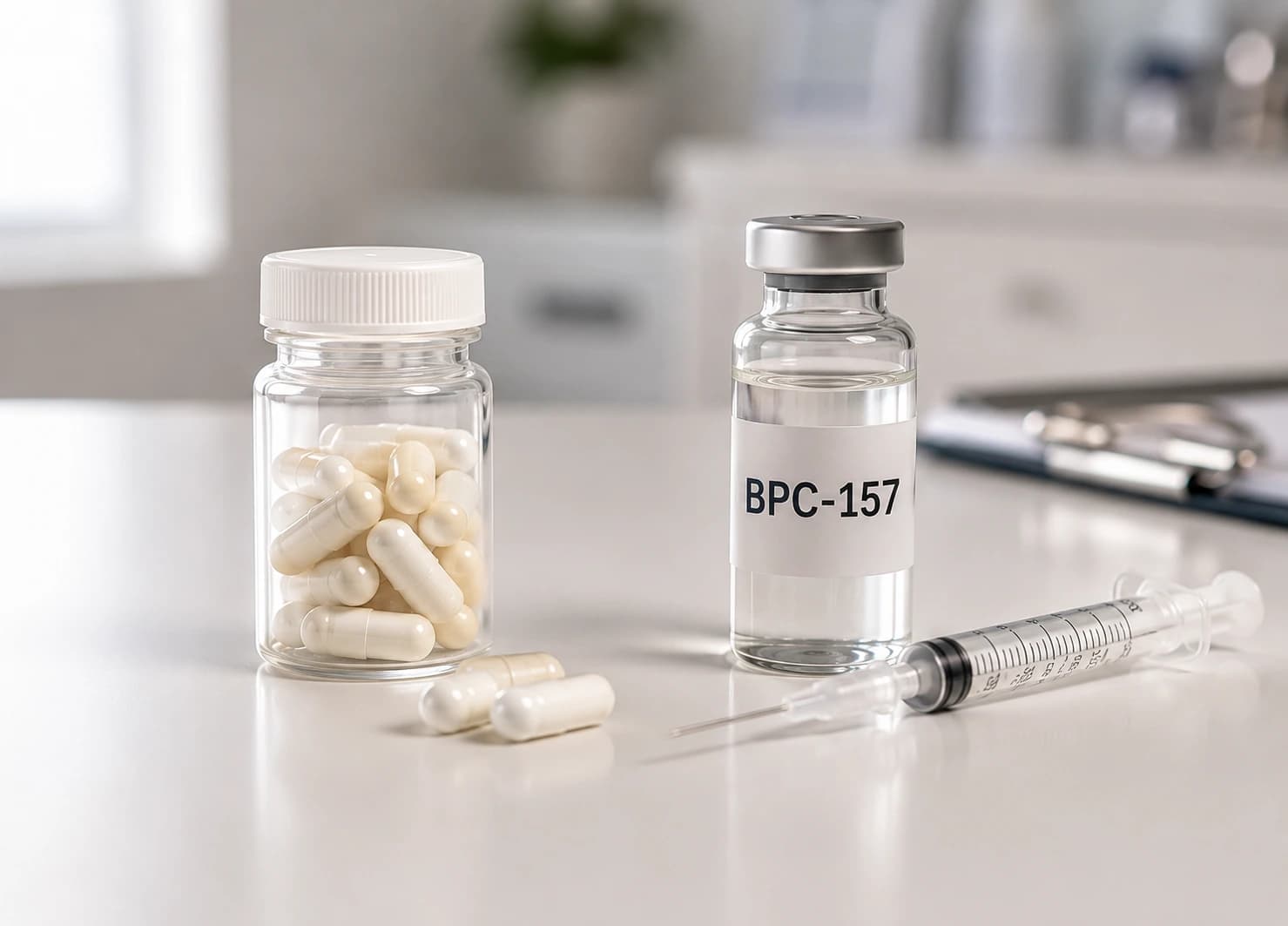
Bioavailability: How It Affects Recovery Outcomes
When people discuss bioavailability, they’re really talking about one thing: how much of what you take actually has a chance to work. For peptides, absorption and breakdown in the body can be decisive.
In my hands-on protocol design, the practical lesson has been this: even if a compound has a theoretical mechanism that’s relevant to tissue repair, low oral bioavailability can turn “the right idea” into a weak outcome.
What low or variable oral bioavailability can look like
- Recovery timelines that don’t match your baseline history (e.g., you don’t see any meaningful change after a reasonable trial).
- Inconsistent effects from week to week (often driven by stomach conditions, timing with meals, or product variability).
- Increased frustration leading to protocol changes too early (which makes it impossible to learn what was actually working).
Why injection can feel more “direct”
Injection bypasses several early barriers, which can translate into more predictable systemic exposure for at least some users. But injection doesn’t automatically guarantee better results; it just changes the delivery pathway. If the product isn’t reliable or dosing isn’t consistent, you can still get disappointing outcomes.
Is BPC-157 Safe to Take Orally? A Safety-First Decision Framework
Safety answers depend on context: your medical history, the exact product you’re using, dosing, and whether it’s being used under appropriate clinical guidance. Since “is BPC-157 safe to take orally” is the core question many people ask, here’s the decision framework I use in practice when evaluating oral peptides for risk management and informed consent.
1) Product quality and testing are non-negotiable
In real-world use, the biggest safety variable often isn’t “oral vs injection”—it’s what’s actually in the bottle. For any peptide protocol, the safest approach is to use sources that provide credible documentation (e.g., third-party testing) and clear labeling. Without that, you can’t confidently assess safety or dosing accuracy.
2) Oral route reduces procedural risks—but not overall risk
Oral use typically avoids sterility and injection-site concerns. However, it still carries risks related to dosing accuracy, contaminants, and individual tolerance. In other words, oral may be procedurally simpler, but it’s not automatically “risk-free.”
3) Start with conservative monitoring, not blind confidence
When I advise people who want to try oral protocols, the key is structured monitoring: track symptom changes, gastrointestinal tolerance, sleep impact, and any unusual responses. If you don’t have a tracking baseline, you’re guessing—and guessing is the enemy of safety.
4) Don’t confuse “popular use” with medical approval
Even if a peptide is widely discussed online, that doesn’t mean it’s been evaluated to the same standard as approved medications for your specific condition. If you have a history of complex injuries, ongoing inflammation, or concurrent medical treatments, a clinician should be involved.
5) Consider drug-interaction risk if you’re on other therapies
If you’re using NSAIDs, corticosteroids, anticoagulants, immunomodulating drugs, or have significant comorbidities, you should treat oral peptide decisions as medical decisions—not just supplement decisions.
Recovery: What You Can Realistically Expect (And What to Watch)
Recovery outcomes depend on injury type, training load, sleep, nutrition, and adherence to a rehab plan. In my experience, peptides are rarely the only variable, and that’s where many people get misled. If you don’t address mechanics and load management, you can spend time and money while the real limiter stays untouched.
Injury types people often target
- Tendon/ligament irritation where connective tissue recovery is the bottleneck
- Soft-tissue setbacks where consistent rehab is essential
- Post-injury periods where maintaining training quality matters
Practical “signal” vs “noise” for judging whether it’s helping
- Signal: progressive improvement across multiple metrics (pain, range of motion, function) over time.
- Noise: short-term changes without functional improvement, or fluctuations that correlate more strongly with training volume or sleep than with dosing.
If you’re evaluating oral use, give it a structured trial window and change only one variable at a time. Otherwise, you won’t know whether your results were from timing, rehab intensity, or the peptide route.
Pros and Cons Summary: Oral vs Injection
| Category | Oral | Injection |
|---|---|---|
| Main benefit | Convenience and lower procedural burden | More direct delivery; often more predictable exposure |
| Main drawback | Potentially lower/variable bioavailability | Procedural risks (sterility/technique) and higher barrier to consistent use |
| Best fit (in practice) | People prioritizing adherence and simplicity, with access to reliable product quality | People comfortable with injections and careful sterile technique, again with reliable product sourcing |
FAQ
Is BPC-157 safe to take orally for recovery?
Oral use may be procedurally simpler than injection, but safety still depends on product quality, dosing accuracy, and your health context. If you’re considering it, prioritize third-party testing/verification of the product and monitor your response closely; involve a clinician if you have medical complexity or are on other medications.
Does oral BPC-157 work as well as injection?
Oral protocols can work for some people, but lower and more variable oral bioavailability can make outcomes inconsistent. Injection may be more predictable for systemic exposure, but it doesn’t guarantee better results—adherence, rehab quality, and product reliability matter just as much.
What are the most common reasons people think oral peptides aren’t working?
In practice, the top reasons are under-delivery (due to absorption variability), inconsistent dosing timing, mixing too many changes at once (so there’s no learning), and using products with uncertain potency or purity.
Conclusion: Choose the Route That You Can Safely Run Long Enough
In the real world, BPC-157 oral vs injection comes down to delivery consistency, practical adherence, and a safety-first evaluation of product quality. Oral may reduce procedural risks, but “safer to take orally” doesn’t mean “risk-free,” and bioavailability can be a limiting factor for meaningful recovery outcomes.
Next step: before you decide on route, write down (1) your injury goal and baseline metrics (pain/function/range of motion), (2) how you’ll track changes over time, and (3) how you’ll verify product quality—then run a structured, single-variable trial so you can tell whether oral use is actually helping you.
Discussion